




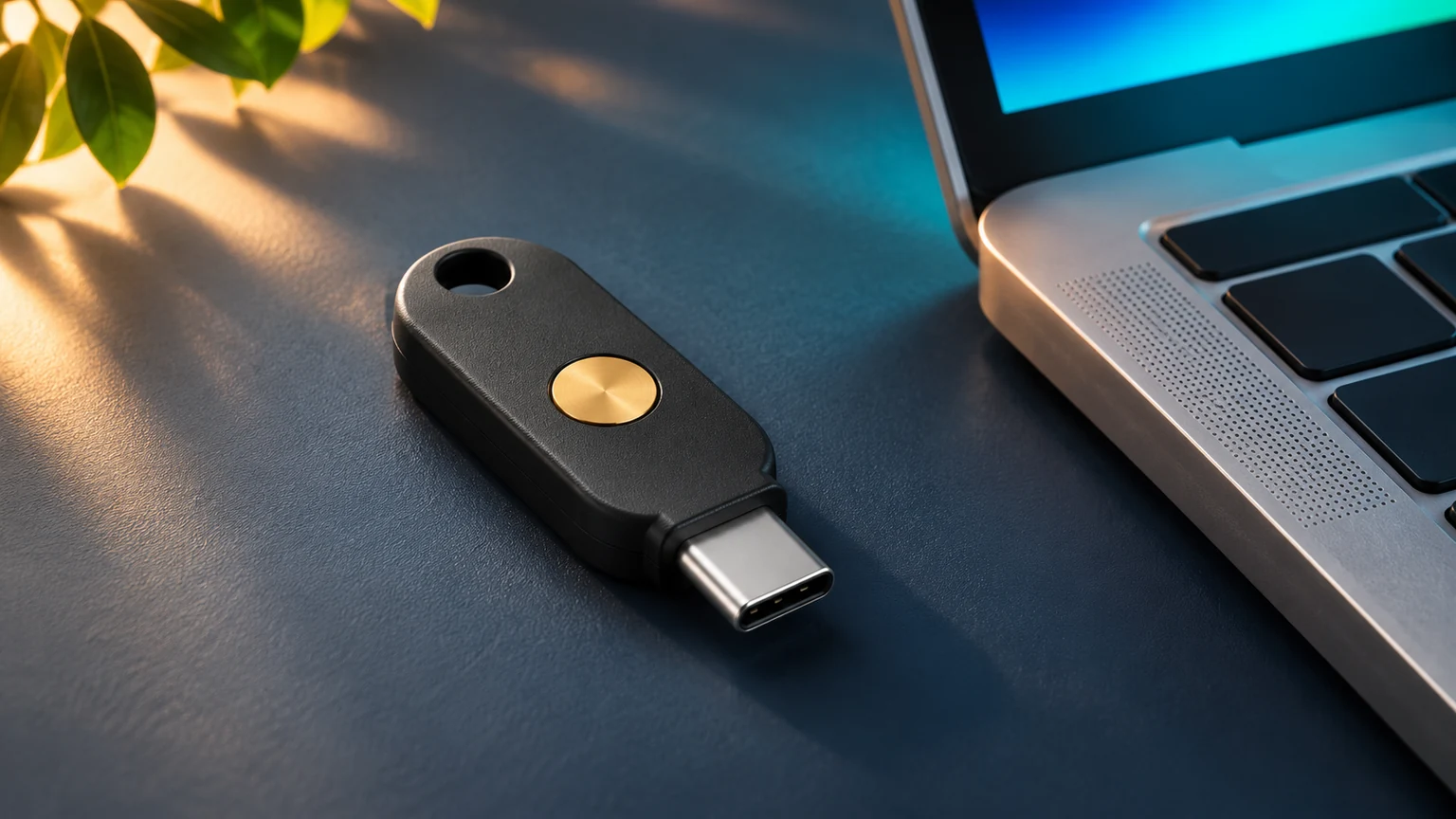
As major identity providers expand their passwordless security offerings, Identité's established YubiKey integration highlights an important consideration for enterprises: innovation isn't always new, and the best authentication solution is about more than the hardware key.
When a major cybersecurity company announces an expanded authentication capability, the industry pays attention.
Large technology providers play an important role in accelerating adoption, educating enterprise buyers, and establishing expectations for modern security.
But sometimes an announcement about the future of authentication also provides an opportunity to revisit technologies that have already been available for years.
On November 12, 2026, DataBreachToday published an interview with Loren Russon, Ping Identity's Senior Vice President of Product Management, examining how the companies are expanding passwordless security across workforce, customer, and emerging AI-related environments.
The discussion highlighted phishing-resistant hardware security keys, enterprise integration, simplified onboarding, and identity lifecycle management.
Identité dates its YubiKey integration in NoPass™, our enterprise passwordless authentication solution, to 2022 in its product history.
In fact, our February 2023 NoPass for Employee MFA brochure explicitly documented YubiKey hardware tokens as supported authentication factors.
Are you comparing what's being announced—or what's already available?
The Ping and Yubico Announcement: Why It Matters
The DataBreachToday interview describes an approach that combines Ping Identity's identity management and integration capabilities with Yubico's hardware security keys.
The objective is to help organizations strengthen authentication without requiring them to abandon existing infrastructure.
Most enterprises operate a mixture of modern cloud applications, legacy systems, directories, remote access technologies, and authentication workflows.
Introducing stronger authentication is rarely as simple as purchasing a security key.
- The authentication solution must work with the systems employees already use.
- It must support onboarding and recovery.
- It must accommodate enterprise security policies.
- And it must deliver an experience that employees can realistically adopt.
The Ping–Yubico discussion also addresses pre-enrolled security keys, customer authentication, and human oversight of AI agents.
The relevant question is what the expanded integration delivers—and how it compares with existing alternatives.
Read the Ping Identity and Yubico solution overview and Yubico’s March 2026 enrollment announcement for context on the expansion.

Identité's YubiKey Integration Dates Back to 2022
Long before this latest industry discussion, Identité had incorporated support for YubiKey hardware tokens into NoPass, our enterprise passwordless multi-factor authentication solution.
The integration dates to 2022, according to Identité's product development history.
Our NoPass for Employee MFA brochure described the ability to incorporate hardware tokens such as YubiKey alongside biometric authentication.
It also explained that security administrators could establish policies defining the authentication factors required for access.
YubiKey support wasn't described merely as a standalone authentication accessory. It was part of a configurable enterprise authentication architecture.
NoPass was designed to accommodate multiple trusted devices and authentication factors while supporting organizational policies governing access.
The February 2023 documentation also described support for Windows, macOS, iOS, and Android devices, together with options for managing registered authentication devices.
Give enterprises flexibility in how they authenticate users without making reusable passwords the foundation of the process.
Why Hardware Security Keys Still Matter
Hardware security keys such as YubiKeys have earned an important place in modern authentication.
When used with appropriate FIDO2/WebAuthn implementations, they provide strong phishing-resistant authentication through public-key cryptography and cryptographic binding to the legitimate service.
Unlike conventional passwords, the authentication process does not depend on users entering a reusable secret into a website.
Hardware keys can be particularly valuable for privileged administrators, employees accessing sensitive systems, and organizations that require stronger authentication controls.
They can also serve as an alternative authentication method for users or environments where mobile-device authentication isn't the preferred approach.
But hardware keys are only one part of an enterprise authentication strategy.
Organizations still need to determine how those keys are enrolled, managed, recovered, and integrated with existing applications.
They must also establish what happens when a key is lost, an employee changes roles, or an account needs to be disabled.
Strong authentication is not simply about choosing a secure device. It's about designing a secure authentication system around it.
NoPass: More Than a Single Authentication Method
Identité developed NoPass to address enterprise authentication requirements across different devices, applications, and infrastructure environments.
Rather than relying exclusively on one authentication method, NoPass supports a configurable approach involving trusted devices and additional factors.
These can include locally verified biometrics and supported hardware tokens such as YubiKey.
- One organization may prefer mobile-device authentication for most employees.
- Another may require hardware security keys for administrators.
- A third may need different authentication policies depending on the application, user, or access requirements.
NoPass also supports enterprise integration through technologies such as RADIUS and standards-based federation, including SAML and OpenID Connect.
Our February 2023 enterprise brochure described these integration approaches and identified environments involving Active Directory, Azure, and identity platforms such as Okta, Ping, and ForgeRock.
Importantly, support for federation with a platform does not automatically establish a certified commercial partnership or identical integration capabilities.
Enterprise Authentication Must Work With Existing Infrastructure
One of the strongest themes in the Ping–Yubico discussion is the need to support legacy systems alongside modern authentication standards.
Enterprise security doesn't operate in a vacuum.
- A financial institution may depend on applications that have been in production for decades.
- A healthcare organization may need to secure access across clinical systems, administrative applications, and remote environments.
- A government agency may face deployment requirements that differ substantially from those of a cloud-native business.
These organizations cannot always replace existing infrastructure simply to adopt stronger authentication.
That's why integration and deployment flexibility matter.
NoPass supports both cloud and on-premises deployment models.
For organizations that require greater control over authentication infrastructure, an on-premises deployment can be an important consideration.
Our enterprise documentation has also described high-availability configurations and deployment technologies such as Docker and Kubernetes.
It's that enterprise authentication should adapt to legitimate business and infrastructure requirements rather than forcing every customer into a single deployment model.
When evaluating passwordless authentication vendors, that flexibility deserves attention alongside phishing resistance and user experience.

Passwordless Authentication Is Bigger Than YubiKey Support
The growing attention surrounding hardware-backed passwordless authentication is encouraging.
But enterprise buyers should avoid treating any individual technology as the complete solution.
- A security key can provide strong authentication.
- A trusted device can provide another authentication mechanism.
- Biometrics can help verify the person using an enrolled device.
- Federation can connect authentication services with enterprise applications.
- Security policies can determine which factors are required.
- And appropriate monitoring and recovery procedures can help organizations manage the authentication lifecycle.
The challenge is bringing them together in a way that is secure, manageable, and practical for users.
At Identité, we believe organizations should have options.
Our passwordless authentication architecture, trusted-device capabilities, enterprise integration options, and contextual authentication experience provide additional considerations.
It's to give organizations the ability to select an authentication approach appropriate to their environment.
What About Full Duplex Authentication®?
Identité's patented Full Duplex Authentication® is another component of our technology.
It introduces reciprocal verification into the authentication experience, helping establish the legitimacy of both sides participating in an authentication interaction.
NoPass also uses contextual information to help users recognize the authentication session they're being asked to approve.
But it's important to distinguish different security mechanisms.
- FIDO2 / WebAuthn
- FIDO2/WebAuthn provides phishing-resistant authentication through cryptographic protections, including binding authentication to the legitimate relying party.
- Full Duplex Authentication®
- Full Duplex Authentication® follows Identité's own reciprocal authentication design.
The two approaches should not be described as identical, nor should either be presented as a universal defense against every form of phishing, session compromise, or social engineering.
For enterprise buyers, the relevant question is how each authentication mechanism works, which threats it addresses, and how it fits within the organization's security architecture.
Five Questions to Ask Before Selecting a Passwordless Authentication Platform
The latest attention surrounding Ping Identity and Yubico provides a timely opportunity for enterprise security leaders to revisit their authentication requirements.
Before selecting a platform, consider five questions.
- Does the platform support the authentication methods our organization needs?
Some environments benefit from hardware security keys. Others may prefer trusted-device authentication with locally verified biometrics. Many enterprises need a combination. Determine whether the platform supports the required methods and whether administrators can apply appropriate authentication policies.
- Can it integrate with our existing infrastructure?
Evaluate support for relevant directories, applications, VPNs, remote access systems, and federation protocols. Don't assume that support for a standard automatically guarantees compatibility with every application. Ask vendors to demonstrate the integrations that matter to your environment.
- What happens when an authentication device is lost or replaced?
Strong authentication can be undermined by weak recovery procedures. Examine how devices are enrolled, replaced, revoked, and recovered. The recovery process should not become an easier path for attackers than the authentication process itself.
- Does the deployment model meet our security and operational requirements?
Some organizations prefer cloud-hosted authentication services. Others require on-premises infrastructure or greater control over specific components. Determine whether the platform can support your operational, regulatory, and availability requirements.
- Are we evaluating established capabilities or future commitments?
This question is often overlooked. An announced capability may be important, but organizations should distinguish between what is generally available, what is in limited release, and what remains on a roadmap. Ask vendors when specific integrations became available. Request documentation. And evaluate the capabilities that can be demonstrated today.

The Bigger Picture: Enterprise Buyers Deserve More Choices
Ping Identity and Yubico are helping bring additional attention to passwordless authentication, hardware security keys, and enterprise identity modernization.
Greater awareness can encourage organizations to reconsider their dependence on passwords and adopt stronger authentication practices.
Our February 2023 product documentation already described YubiKey hardware tokens as supported authentication factors, together with configurable security policies and enterprise integration capabilities.
It matters because organizations deserve to know which capabilities are already available from the vendors they're evaluating.
For years, Identité has focused on making stronger authentication practical for organizations that need security without unnecessary complexity.
That includes reducing dependence on reusable passwords, supporting trusted devices and biometrics, accommodating hardware security keys, and integrating authentication into existing enterprise environments.
The more organizations understand the benefits of strong, phishing-resistant authentication, the better.
They should examine established capabilities, technical architecture, integration requirements, deployment flexibility, and the actual authentication experience.
And we're continuing to build on that foundation.
Explore NoPass for workforce access · Read the NoPass workforce integration guide